How to Wear a Convertible Dog Leash: Handheld, Crossbody, and Waist
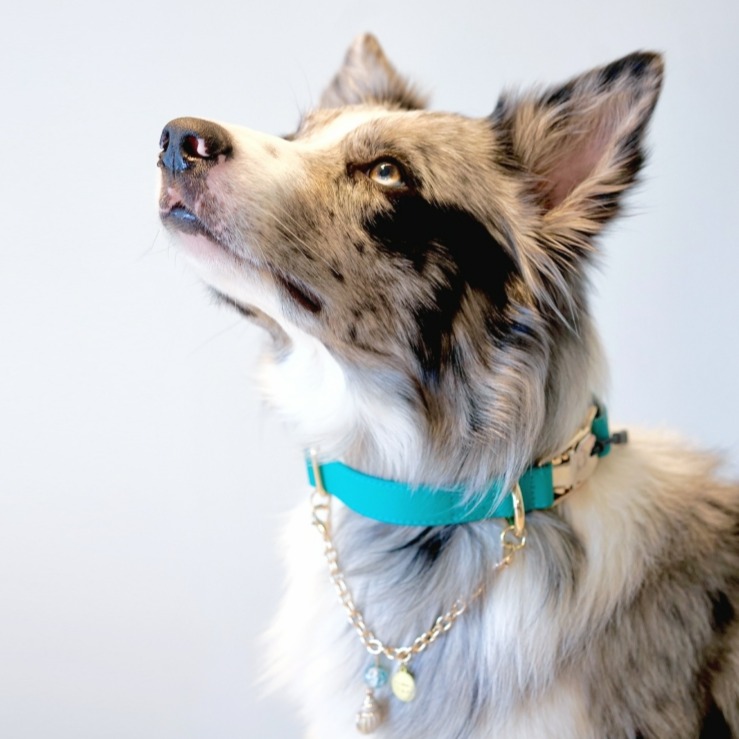
A convertible dog leash gives you more than one way to carry the same leash, making it easier to adapt your setup to a relaxed neighborhood walk, a café stop, or a moment when you need a free hand. The most useful convertible designs keep each mode simple while preserving reliable control and a comfortable connection with your dog.
Quick answer: what is the best way to wear a convertible dog leash?
Use handheld mode when you need the fastest, most direct control; crossbody mode for calm, hands-free walking when your dog already walks on a loose leash; and waist mode when you want your hands available and the leash can sit securely without affecting your balance. Whichever mode you choose, attach the leash only to the designated ring on a correctly fitted collar or harness, keep enough slack for natural movement, and test the setup indoors before going outside.
Couture Capri’s Capri Dog Leash – Sunset is designed for handheld, crossbody, and tie-on-waist wear, allowing one leash to move between different parts of your day.
What is a convertible dog leash?
A convertible dog leash is a multipurpose leash that can be configured in two or more carrying styles. Instead of changing to a different leash for every situation, the user adjusts or reconnects the same leash according to the product instructions. Common modes include a traditional hand loop, a crossbody arrangement, and a waist-worn arrangement.
Convertible does not mean one setup suits every dog or every environment. The right mode depends on your dog’s walking skills, size, pulling behavior, the leash length, your balance, and the surroundings. The leash hardware, stitching, attachment points, and companion collar or harness still do the practical work in every configuration.
Three ways to wear a convertible dog leash
1. Handheld mode: best for direct control
Handheld mode is the most familiar option and is often the best starting point with a new leash. It keeps the connection easy to shorten or reposition when approaching a road crossing, another dog, a narrow sidewalk, or a busy entrance.
Hold the intended handle rather than wrapping extra leash tightly around your fingers or wrist. Gather slack in loose folds if necessary, and keep your hand relaxed enough to respond without creating constant tension. Handheld mode is also the easiest way to evaluate a new leash before trying its hands-free configurations.
2. Crossbody mode: useful for calm, hands-free walks
In crossbody mode, the leash sits diagonally across the torso. This can keep both hands available for carrying a bag, handling treats, or managing a phone while maintaining a connection with the dog.
The leash should lie flat rather than pressing against the neck, and the connection point should remain positioned so that sudden movement does not twist your body. Crossbody wear is most appropriate for a dog that can maintain a loose leash. If your dog lunges, changes direction abruptly, or pulls with force, return to a more direct setup and seek individualized guidance from a qualified trainer.
3. Waist mode: convenient when the setup stays balanced
A tie-on-waist configuration can free both hands while keeping the leash centered closer to the hips. Adjust it according to the product instructions so it remains secure without restricting breathing, movement, or access to the release or adjustment point.
Waist mode is not automatically suitable for running, crowded streets, or strong pullers. A sudden pull can affect balance, especially on stairs, wet ground, ice, or uneven paths. Begin indoors and then test it on a short, quiet route before using it in a more demanding environment.
How to switch leash modes safely
Step 1: inspect the entire leash
Before changing configurations, check the clips, rings, adjustment points, stitching, and leash body. Hardware should close fully and move as intended. Stop using the leash if a clip sticks, a ring is bent, stitching is loose, or the material shows damage.
Step 2: configure the leash before attaching your dog
Practice each mode without your dog connected. Follow the product-specific instructions and use only the intended clips and rings. Avoid improvised knots or attachments that could tighten unexpectedly, release under movement, or place load on a decorative component.
Step 3: check the companion collar or harness
Attach the leash to the designated load-bearing ring on a correctly fitted walking collar or harness. If you use a harness, confirm that it remains centered and that the straps allow natural shoulder movement. The Couture Capri Size Guide can help you check measurements before selecting coordinating walking gear.
Step 4: set a practical amount of slack
Your dog should be able to walk naturally without constant tension, but the leash should not drag, loop around the legs, or create a tripping hazard. Recheck the available length whenever you move between handheld, crossbody, and waist modes because the usable distance may change.
Step 5: perform an indoor movement test
Walk, turn, stop, and change direction indoors. Confirm that the leash does not cross your throat, restrict your stride, loosen around the waist, or pull the dog’s gear off-center. Practice reaching the adjustment or release point without looking down.
Step 6: take a short first walk
Choose a quiet, familiar route and stay attentive. Switch back to handheld mode if traffic, other animals, crowding, or your dog’s behavior makes the hands-free arrangement feel less controlled. Check every connection again after the walk.
How to choose the right mode for the situation
For close handling and unpredictable surroundings, handheld mode is usually the most responsive. For a calm dog on an open, familiar route, crossbody mode can be convenient. Waist mode may work when the leash remains stable at the hips and the dog does not create sudden changes in load.
Do not choose a mode only because it looks effortless in a photograph. Consider the dog in front of you and the conditions of that particular walk. Puppies, dogs learning leash skills, strong pullers, escape-prone dogs, and dogs with reactivity may need a more controlled setup and professional support before hands-free use.
Pairing the leash with a collar or harness
A convertible leash still depends on correctly fitted walking gear. A harness may distribute contact across the body, while a collar provides a simpler connection for dogs suited to collar walking. Neither is automatically right for every dog.
Explore Couture Capri’s dog harness collection and luxury dog collars to compare coordinated options. If you are considering a magnetic harness, read Are Magnetic Dog Harnesses Safe? A Fit and Buying Guide before choosing a size and walking setup.
Style and function can work together
A versatile leash can look refined without making the walking routine complicated. Repeating a color or metal finish across the leash, harness, collar, and accessories creates a cohesive look while each part keeps a clear job.
The Sunset leash can be paired with coordinating pieces from the Couture Capri leash collection. For carrying waste bags in the same color story, the Charm Pouch – Sunset is a separate accessory; keep any pouch or jewelry clear of working clips and adjustment points.
For more guidance on decorative details, see Dog Harness Jewelry: How to Style Charms and Pendants Safely.
A pre-walk checklist
Before leaving, confirm that the leash is arranged in the intended mode; every clip is fully closed; the collar or harness is correctly fitted; the leash has enough slack without dragging; decorative accessories cannot interfere with hardware; and you can quickly return to handheld control if conditions change.
Review Couture Capri’s Dog Accessory Safety Guidelines and inspect walking equipment before every use.
Frequently asked questions
Is a convertible dog leash the same as a hands-free leash?
A convertible leash may include one or more hands-free modes, but it can also be used by hand. Check the individual product because available configurations and adjustment methods vary.
Is crossbody or waist mode better?
Crossbody mode distributes the leash diagonally across the torso, while waist mode places it closer to the hips. The better choice is the one that remains secure, preserves balance, and gives appropriate control for your dog and environment.
Can I use a hands-free leash with a strong puller?
Hands-free wear may transfer a sudden pull directly to your torso or hips and affect balance. A strong puller may need a different setup, structured leash training, and advice from a qualified trainer before crossbody or waist use.
Should a convertible leash attach to a collar or a harness?
Use the designated load-bearing ring on whichever correctly fitted walking system is appropriate for your dog. Do not attach the leash to jewelry, a charm ring, or another decorative component.
How much slack should a dog leash have?
Provide enough slack for a natural stride without allowing the leash to drag or wrap around legs. The appropriate amount changes with the setting, the dog, and the leash configuration, so reassess it whenever you switch modes.
Can I add a pouch to a convertible leash?
Only add a compatible lightweight pouch where it will not block a clip, ring, adjustment point, or your grip. Confirm that the added weight does not make the leash rotate or swing excessively, and remove it if it interferes with handling.
The bottom line
The value of a convertible dog leash is flexibility: handheld for direct control, crossbody for calm hands-free walking, and waist-worn when the setup remains secure and balanced. Learn each configuration without your dog first, inspect all hardware, test indoors, and choose the mode for the real conditions of the walk—not just convenience. Used thoughtfully, one well-designed leash can support a more adaptable and polished daily routine.


Comments