
What Color Dog Collar Looks Best? A Coat Color Guide
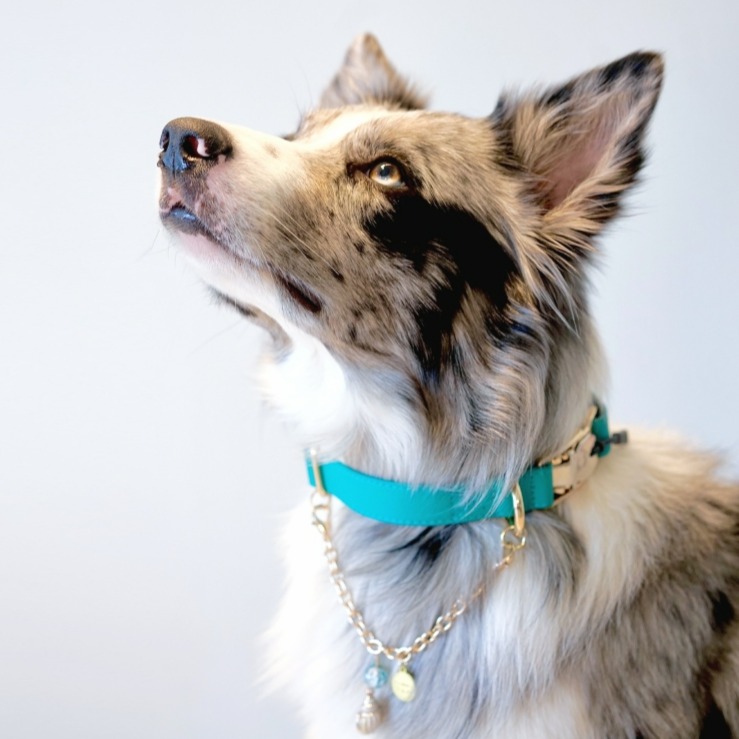
Short answer: The best dog collar color creates clear contrast with your dog’s coat while complementing its warm or cool undertones. Bright, saturated shades tend to stand out on dark coats; deeper jewel tones define pale coats; greens, teals, and blues often flatter warm brown or golden coats; and a clean solid color usually gives merle, brindle, or multicolor coats visual balance. Fit and hardware quality still matter more than color.
There is no single universal “best” shade. The goal is to choose a color that looks intentional on your dog, is practical for daily wear, and works with the leash or harness you already use. This guide gives you a simple method, coat-by-coat suggestions, and a final checklist.
The three-part test for choosing a dog collar color
1. Start with contrast
Look at your dog from several feet away. If the collar disappears into the coat, move lighter, darker, or more saturated. Strong contrast makes the collar easier to see in everyday life and more legible in photos. A black coat can carry vivid color; a cream coat often benefits from a deeper, richer shade.
2. Check the coat’s undertone
Coat color is only the first layer. Warm coats contain golden, red, copper, or chocolate notes, while cool coats may read blue-gray, silver, charcoal, or icy white. You can create harmony by staying in the same temperature family or make a stronger statement with a complementary temperature. Both approaches work; contrast simply feels bolder.
3. Let the hardware finish the look
Metal details act like jewelry. Warm hardware can echo golden and reddish coats, while cooler metal tones can sharpen black, gray, and white coats. If your dog already wears a tag or charm, consider how all the metal finishes look together. Keep decorative pieces secure and review the Couture Capri safety guidelines before adding accessories.
Best collar colors for black and dark-coated dogs
Black, charcoal, and very dark brown coats give you the widest range of high-contrast options. Clear jewel tones, bright blues, greens, warm pinks, and luminous neutrals can all read beautifully because the coat provides a strong visual frame.
For a refined result, avoid choosing a shade that is only slightly lighter than the coat unless you want a subtle, tonal look. In low light, a near-black collar may disappear completely. A brighter collar can improve visual separation, but color alone is not safety equipment—use appropriate reflective or illuminated gear when visibility matters.
Best collar colors for white, cream, and pale coats
White and cream coats usually look most defined with medium-to-deep colors. Navy, forest-inspired greens, berry shades, rich coral, and saturated blue can create a crisp outline. Soft pastels can also look elegant, but they produce a quieter, lower-contrast effect.
Consider maintenance as well as appearance. Very light collars may show everyday soil faster, especially on long-haired dogs or during wet-weather walks. Check the product care instructions before cleaning, and avoid harsh products that could affect color or hardware.
Best collar colors for brown, red, and golden coats
Brown, chestnut, copper, red, and golden coats often pair naturally with greens, teals, turquoise, blues, and selected purples. Those cooler shades create contrast against the coat’s warmth. If you prefer a harmonious palette, terracotta, amber, warm rose, and deep neutral tones can create a polished tonal effect.
When a warm coat has multiple shades—such as a darker muzzle or lighter chest—judge the collar against the fur directly beneath it. That is the area that determines whether the collar stands out.
Best collar colors for gray, blue, and silver coats
Gray and silver coats can lean cool, neutral, or slightly warm. Rich warm shades such as coral, burgundy, and golden neutrals create contrast, while blue, teal, or violet produces a cooler editorial look. For a very pale silver coat, increase saturation so the collar does not look washed out.
Dogs with blue-gray coats often photograph differently in daylight and indoor light. Compare the color in both conditions before deciding; camera white balance can make the same pairing look warmer or cooler.
Best collar colors for merle, brindle, and multicolor coats
For a patterned coat, a solid collar is usually the easiest styling choice. Select one existing coat color and deepen it for harmony, or choose one complementary accent for contrast. If the coat already has high visual activity, a single clear color lets both the dog and the collar remain readable.
Patterns can still work, but scale matters. A small, busy print may compete with brindle striping or merle spotting. If you choose a decorative collar, step back and make sure the overall look does not blur together.
How to compare Couture Capri colorways
Begin with the luxury dog collar collection and open several options side by side. Compare Capri Collar – Skyline, Capri Collar – Sunset, Capri Collar – Forest, and Capri Collar – Blossom against a recent photo of your dog taken in natural light.
Do not decide from the color name alone. Look at the product photographs, the hardware, and the full palette. Screen settings can shift color, so use the images as a styling reference rather than an exact color calibration.
A five-step dog collar color checklist
Step 1: Prioritize fit
Confirm the correct collar type and size before styling. Use the Couture Capri size guide and read the luxury dog collar buying guide if you are still comparing collar styles.
Step 2: Take a daylight photo
Photograph your dog near a window or outside in open shade. Daylight gives you a more dependable view of the coat’s undertone than warm household lighting.
Step 3: Choose two contrast levels
Pick one bolder option and one quieter option. This makes the decision easier than comparing many similar shades and clarifies whether you want the collar to be a focal point or a supporting detail.
Step 4: Check the complete walking set
Place the collar color next to your leash, harness, tag, and any walking pouch. Matching does not require identical colors. Repeating one color or one hardware finish is often enough to make the set feel coordinated. For more ideas, see the matching harness and leash styling guide or browse Couture Capri leashes.
Step 5: Test practicality
Ask how often the collar will be worn, where your dog walks, and how much cleaning it may need. A special-occasion palette can be more delicate; a daily collar should suit your routine as well as your dog’s coat.
Common styling mistakes to avoid
Choosing by trend alone: A fashionable shade is less useful if it disappears against the coat or clashes with the rest of the walking set.
Ignoring long fur: On fluffy dogs, much of the collar may be hidden. A stronger color and a clear hardware detail can help the visible portion read intentionally.
Using color as a safety substitute: Bright color can improve contrast, but it does not replace reflective equipment, lights, a secure fit, or attentive handling.
Over-accessorizing: One focal detail usually looks more considered than several competing colors, patterns, tags, and charms.
Frequently asked questions
What color collar looks best on a black dog?
Bright or saturated colors usually create the clearest contrast on a black dog. Jewel tones, vivid blues and greens, coral, and warm pinks are reliable starting points. Choose the final shade by comparing it with the dog’s undertone and your preferred hardware.
What color collar looks best on a white dog?
Medium-to-deep colors tend to define a white coat well. Navy, forest green, berry, rich coral, and saturated blue create a crisp outline. Pastels give a softer look but may offer less contrast.
What color collar suits a brown or golden dog?
Cool colors such as teal, turquoise, blue, and green often contrast beautifully with brown, red, and golden coats. Warm rose, amber, and terracotta create a more tonal, harmonious effect.
Should a dog’s collar match the leash?
It does not have to match exactly. A coordinated set can repeat one color, one material, or one hardware finish. Related colors often look more sophisticated than a perfectly identical set.
Are patterned collars good for merle or brindle dogs?
They can be, but a solid color is usually easier to style with a patterned coat. If you choose a pattern, use a scale and contrast level that remain distinct from the dog’s natural markings.
Does collar color improve nighttime safety?
Color may improve daytime contrast, but it is not a substitute for purpose-built visibility gear. For low-light walks, use reflective or illuminated equipment suited to your dog and environment, and always check fit and closures before leaving.
Final answer
Choose the collar color that gives your dog enough contrast, respects the coat’s undertone, and works with the hardware and walking gear you already own. Start with fit, compare two or three shades in daylight, and let your dog’s coat—not a passing trend—make the final decision.


Comments